Why Continental Europe

You’re not just choosing a college,
you are becoming the unique differentiator
on top of the pile of resumes.

A world class degree Life changing experiences A global peer network Graduating without debt

Leverage the Top Dogs of Quality Higher EducationA career advantage from day one.

ETH Zurich

The unicorns the US hires from this university

Program
Robotics: the Autonomous Systems Lab and Robotic Systems Lab (MSc Robotics, Systems and Control).
Reason
Robotics companies worldwide recruit ETH robotics graduates. Google runs one of its largest engineering offices outside the US in Zurich, largely fed by ETH computer science.
Source
asl.ethz.ch · rsl.ethz.ch
EPFL

The unicorns the US hires from this university

Program
Programming languages: Prof. Martin Odersky created the Scala language at EPFL (first released 2004).
Reason
Scala powers big-data tools (Apache Spark is written in Scala), so data-infrastructure companies value EPFL programming-language graduates.
Source
actu.epfl.ch · people.epfl.ch/martin.odersky

PSL University

The unicorns the US hires from this university

Program
Dauphine-PSL Master 203 Financial Markets, and mathematics and machine learning at ENS-PSL.
Reason
French-trained mathematicians fill quant jobs at banks and hedge funds, and AI labs in Paris and abroad. The school says 80% of M1/M2 students got offers from firms like JP Morgan, Goldman Sachs, Morgan Stanley and BlackRock (January 2025).
Source
dauphine.psl.eu · ax.polytechnique.org

Sorbonne University

The unicorns the US hires from this university

Program
M2 Probabilités et Finance, known as the “Master El Karoui,” run jointly with École Polytechnique, in partnership with ENS and ESSEC.
Reason
One of the most prestigious programs in quantitative finance in the world; the Wall Street Journal found its graduates in many senior derivatives roles. Nearly one in three quants working in France in 2019 came through it, and graduates are placed in London, Hong Kong and the US.
Source
finance.math.upmc.fr · Wikipedia: Nicole El Karoui · business-cool.com
TU Munich

The unicorns the US hires from this university

Program
Database Systems group (Prof. Thomas Neumann, Prof. Alfons Kemper), through the MSc Informatics with a data-engineering focus.
Reason
Few places in the world teach how to build database engines from the inside. Graduates go to cloud-data and database companies.
Source
cedardb.com/about · Wikipedia: Thomas Neumann
LMU Munich

The unicorns the US hires from this university

Program
CompVis / Computer Vision and Learning group (Prof. Björn Ommer), which invented latent diffusion, the technology behind Stable Diffusion.
Reason
People from this group went on to Stability AI and founded Black Forest Labs (image-generation AI). Generative-image AI companies recruit here.
Source
ommer-lab.com · Wikipedia: Stable Diffusion
Heidelberg University

The unicorns the US hires from this university

Program
Molecular biosciences and cancer research, next to EMBL (European Molecular Biology Laboratory) and the DKFZ (German Cancer Research Center).
Reason
Biotech and pharma companies such as Roche, Novartis and BioNTech recruit molecular biologists and computational biologists from here.
Source
nobelprize.org · github.com/compvis
KU Leuven

The unicorns the US hires from this university

Program
COSIC (Computer Security and Industrial Cryptography), where AES, the encryption that protects most of the internet, was designed; and imec, the world's largest independent chip research center.
Reason
Cryptographers and security engineers are hired by chip makers, banks and big tech. imec is a path for semiconductor careers (ASML, TSMC, Intel, Samsung).
Source
esat.kuleuven.be/cosic · Wikipedia: IMEC

University of Amsterdam

The unicorns the US hires from this university

Program
MSc Artificial Intelligence: the Amsterdam Machine Learning Lab (Prof. Max Welling) and QUVA, a joint deep-learning lab with Qualcomm.
Reason
Qualcomm, Microsoft Research, Google DeepMind and Bosch recruit here for machine-learning research.
Source
ivi.fnwi.uva.nl/quva · amlab.science.uva.nl
Karolinska Institutet

The unicorns the US hires from this university

Program
Master's Programme in Bioentrepreneurship: connects science and business, with placements in companies.
Reason
Leads to business development, product and venture-capital jobs in biotech, pharma and medtech. AstraZeneca and the Stockholm life-science cluster (SciLifeLab) are right next door.
Source
education.ki.se
TU Delft

The unicorns the US hires from this university

Program
Quantum computing at QuTech, where Microsoft opened its own Quantum Lab on campus; and water and coastal engineering.
Reason
Dutch coastal engineers are hired worldwide for flood defense and port projects.
Source
qutech.nl · tudelft.nl
Leiden University

The unicorns the US hires from this university

Program
Advanced LLM in Air and Space Law (International Institute of Air and Space Law), running since 2000 and described as unique in the world.
Reason
Airlines, airports, aerospace and space companies, aviation authorities and international organizations recruit graduates. Space law is a fast-growing niche as private space companies multiply.
Source
universiteitleiden.nl
Ready for the Global AI workplace?“Employers expect 39% of key skills to change by 2030.” (World Economic Forum)AI will do tasks. Employers will hire Human Skillsets.

Cultural intelligence

AI can translate the words but can’t read the room.

What living abroad builds
Learning the unwritten rules about how direct people are, how much rank matters, attitudes to time and politeness. Doing group projects with classmates from many countries
What the employer sees
Can join global teams and work with clients abroad without friction
Second language

Knows when a translation is wrong, too blunt or rude.

What living abroad builds
Using Dutch, French, German etc. for real tasks with a landlord, a doctor, in shops. Learning to speak clear, simple English to non-native speakers
What the employer sees
Useful for international markets. Shows discipline and that they can learn
Problem solver

AI gives answers. Someone has to define the right problem.

What living abroad builds
Opening a bank account, registering with the city, sorting out housing, getting through a train strike, all without a parent nearby
What the employer sees
A self-starter who arrives with solutions, not just problems
Adaptability

Has already been a beginner in a whole new country.

What living abroad builds
New teaching style, grading, food and social rules all at once. They learn to function before it all makes sense
What the employer sees
Handles change, new tools and shifting priorities without stalling
Independence

Owns the work and uses AI responsibly without being checked on.

What living abroad builds
Managing their own budget, deadlines, paperwork and residence permit. European universities expect more independent study
What the employer sees
Needs little supervision. Can be trusted with remote work and owning a project
Communication

Clear instructions to AI, clear explanations to people.

What living abroad builds
Explaining ideas clearly across language gaps and checking they were understood
What the employer sees
Writes clear emails and gives clear presentations, including to international colleagues
Teamwork in diverse teams

Coordinates people in several countries, and the AI doing parts of the work.

What living abroad builds
Small-group learning where each group has to agree on its work (e.g. Maastricht’s problem-based learning)
What the employer sees
Proof they can collaborate, not just a claim
Resilience

Ready for the job changes and retraining AI will bring.

What living abroad builds
Getting through homesickness, loneliness and setbacks in an unfamiliar system
What the employer sees
Recovers from pressure and failure
Global perspective

Understands why AI rules differ between Europe and the US.

What living abroad builds
Seeing how other countries handle healthcare, transport, sustainability and business
What the employer sees
Brings new ideas. Useful to companies that sell or source abroad
Curiosity and initiative

Tries new tools on their own instead of waiting for training.

What living abroad builds
The decision to go abroad, plus clubs, internships and travel while there
What the employer sees
Goes after learning instead of the comfortable choice
Checking AI output

AI sounds confident even when it is wrong. They double-check.

What living abroad builds
Learning not to trust the first answer: the app said the train was running and it wasn’t; the website rules were out of date. They checked with locals and official sources
What the employer sees
Catches mistakes before they reach a client or a manager
Using AI across languages

Knows what AI misses about local culture, tone and rules.

What living abroad builds
Using translation apps, maps and AI tools every day in another language, and seeing where they fail on local context
What the employer sees
Can use AI for international work without embarrassing mistakes

A few of the top executives in the US
who leveraged their educations abroad

Meta
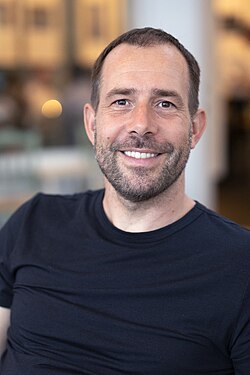
Javier Oliván

Meta

Javier Oliván
Chief Operating Officer

Studied in Europe
University of Navarra, Spain (engineering)

Photo: Christopher Michel, CC BY-SA 4.0

Apple
LM

Apple

Luca Maestri
CFO 2014–2024, now leads Corporate Services

Studied in Europe
LUISS University, Rome, Italy (economics)
Microsoft
Brad Smith

Microsoft

Brad Smith
Vice Chair & President

Studied in Europe
Graduate Institute Geneva, Switzerland (a year of international law & economics)

Photo: Web Summit, CC BY 2.0

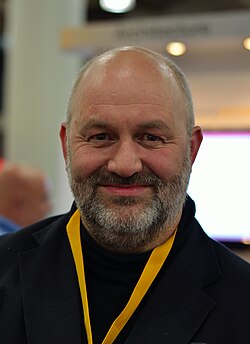
Amazon
Werner Vogels

Amazon

Werner Vogels
CTO

Studied in Europe
Vrije Universiteit Amsterdam, Netherlands (PhD)

Photo: Raysonho @ Open Grid Scheduler / Grid Engine, CC0

Anthropic
JL

Anthropic

Jan Leike
Leads Alignment Science

Also
OpenAI · Google DeepMind
Studied in Europe
University of Freiburg, Germany
OpenAI
Fidji Simo

OpenAI

Fidji Simo
CEO of Applications

Also
Instacart (former CEO)
Studied in Europe
HEC Paris, France

Photo: KrackenUni, CC BY-SA 4.0

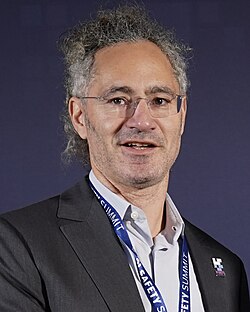
Palantir
Alex Karp

Palantir

Alex Karp
Co-founder & CEO

Studied in Europe
Goethe University Frankfurt, Germany (PhD)

Photo: UK Government, CC BY 2.0

Snowflake
Frank Slootman

Snowflake

Frank Slootman
Former CEO

Also
ServiceNow · Data Domain
Studied in Europe
Erasmus University Rotterdam, Netherlands

Photo: Alivecoverage, CC BY-SA 4.0

Pfizer
Albert Bourla

Pfizer

Albert Bourla
Chair & CEO

Studied in Europe
Aristotle University of Thessaloniki, Greece

Photo: Ehbrooklyn96, CC BY-SA 4.0

Johnson & Johnson
Joaquin Duato

Johnson & Johnson

Joaquin Duato
Chair & CEO

Studied in Europe
ESADE Barcelona, Spain

Photo: Stephanie Diani, CC BY-SA 4.0

PepsiCo
Ramon Laguarta

PepsiCo

Ramon Laguarta
Chair & CEO

Studied in Europe
ESADE Barcelona, Spain

Photo: Qwertyfry38, CC BY-SA 4.0

Synopsys
Aart de Geus

Synopsys

Aart de Geus
Co-founder, former CEO

Studied in Europe
EPFL Lausanne, Switzerland

Photo: Rachel Nicolas, CC BY-SA 2.0

Udacity
Sebastian Thrun

Udacity

Sebastian Thrun
Founder

Also
Google X · Kitty Hawk
Studied in Europe
University of Bonn, Germany

Photo: Christopher Michel, CC BY-SA 4.0

Logos identify each executive’s company. No endorsement implied.

The career payoff of studying abroad

Paid more from day one
+$4,159

higher first-job salary for US business graduates who studied abroad

The Forum on Education Abroad, 2025

Four US business schools took part: Ohio State (Fisher), University of Washington (Foster), University of Tennessee Knoxville (Haslam) and University of Maryland (Robert H. Smith). 7,487 business graduates from 2021–2025; 1,651 of them had studied abroad. The salary gain showed up among B and C students too, not only straight-A students, and Europe was the most common destination. The report’s own words: “Studying abroad is worth the investment.”

Source: Dietrich, A., et al. (2025). International Experience as a Career Asset. The Forum on Education Abroad

Fewer gaps on the résumé
23% lower

unemployment five years after graduation, and half as likely to face long-term unemployment

European Commission, Erasmus Impact Study, 2014

Graduates with international experience “are half as likely to experience long-term unemployment”, and “five years after graduation, their unemployment rate is 23% lower.”

Source: European Commission press release IP/14/1025, 22 September 2014

A shorter job hunt
Hired faster

Former Erasmus+ students find a job quicker than graduates who stayed home

Erasmus+ Higher Education Impact Study, 2019

Based on almost 77,000 survey responses, carried out by CHE Consult and ICF for the European Commission, 2017–2019. Former Erasmus+ students “find a job quicker than non-mobile graduates.”

Source: Erasmus+ Higher Education Impact Study, Final Report, European Union 2019

Recruiters notice it
60%

of recruiters actively seek or value international study experience when hiring

QS Global Employer Survey, 2011

More than 10,000 recruiters in 116 countries were asked: “Do you actively seek or attribute value to an international study experience when recruiting?” For US employers, the result “is significantly more positive for the United States than previous studies.”

Source: QS Global Employer Survey Report 2011

What employers screen for
92%

of employers look for the traits study abroad builds: tolerance, confidence, problem-solving, curiosity

European Commission, Erasmus Impact Study, 2014

The largest study of its kind: nearly 80,000 respondents, including 650 employers, across 34 countries. “92% of employers are looking for personality traits boosted by the programme such as tolerance, confidence, problem-solving skills, curiosity.”

Source: European Commission press release IP/14/1025, 22 September 2014

Trusted with more, sooner
64%

of employers give staff with international experience greater professional responsibility

European Commission, Erasmus Impact Study, 2014

“Staff with international experience are given greater professional responsibility according to 64% of employers.” Nearly 80,000 respondents, including 650 employers, across 34 countries.

Source: European Commission press release IP/14/1025, 22 September 2014

The internship becomes the job
1 in 3

Erasmus trainees is offered a position at the company where they trained

European Commission, Erasmus Impact Study, 2014

“More than one in three Erasmus trainees is offered a position at the enterprise where they do their traineeship.”

Source: European Commission press release IP/14/1025, 22 September 2014

No time lost
Graduate faster

Students who studied abroad graduated faster, not slower

University System of Georgia, 2022

Researchers studied 221,981 students at 35 US institutions, more than 30,000 of whom had studied abroad. Studying abroad was linked to higher four- and six-year graduation rates and a higher GPA. “If you undertake education abroad, it’s not going to impede completion of your degree. In fact, the evidence shows that it will accelerate time to graduation relative to peers who don’t study abroad.” — Donald Rubin, Professor Emeritus, University of Georgia

Source: UGA Today, 7 March 2022

Where leaders got their start
98%

of 44 senior leaders said studying abroad shaped their careers

IIE & AIFS Foundation, Passport to Leadership, 2026

IIE and the AIFS Foundation asked 44 senior leaders how studying abroad influenced their path to leadership; 98% said it shaped it.

Source: The PIE News

The seven questions every family asks

Why continental Europe

No sales pitch. Published tuition figures, real rankings, and the honest caveats — sourced from each university’s own pages. Click any question to see the answer.

This is the single most expensive misunderstanding in US college planning. Families who want an English-taught degree abroad understandably gravitate towards the UK and Ireland. There are obviously top-notch institutions there, and at first glance the prices can look reasonable — but they are often significantly higher than a top-notch university in continental Europe.

English-taught degrees are everywhere on the continent.

3,400+Bachelor’s paths
8,200+Master’s paths
870Universities
550+Culture cities

All taught in English. No second language required to enroll — though most students pick one up anyway, and it becomes one of the more valuable lines on their résumé.

Let’s take an example. Most international families have not heard of KU Leuven.

That is a marketing fact, not an academic one.

It ranks ahead of the majority of U.S. private universities, and a US student pays €5,613 a year for an English-taught business degree.

Top research universities in Europe on the CWTS Leiden Ranking — a purely bibliometric, no-reputation-survey world ranking.

#46In the world — Times Higher Education 2026
9 yearsRunning as Europe’s most innovative university — Reuters
1425Founded — two centuries before Harvard

Degrees are Bologna-standard and recognized across 49 countries. Students specialize from the first year rather than drifting through general-education requirements. Seminar teaching and problem-based learning are the norm, not the honors-track exception.

Start with what you are being asked to pay at home. Then look at the published rate a U.S. student pays in Europe — full price, no passport discount.

UniversityCityProgram (English-taught)Tuition / year (approx.)
🇺🇸 U.S. private, selective—Wellesley College$69,800
🇺🇸 Public flagship, out-of-state—University of Michigan$66,203
🇺🇸 Public flagship, out-of-state—University of Virginia$62,923
🇺🇸 Public flagship, out-of-state—UC Berkeley$48,726
🇺🇸 U.S. private university—National average$45,000
🇺🇸 U.S. public, in-state—National average$11,950
U.S. tuition runs from about $11,950 in-state to roughly $70,000 at a selective private or an out-of-state flagship — and housing and meals add about $22,000 on top.
UK — published rate for international students, 2026/27 entry
🇬🇧 OxfordOxford—$49,340–$82,930£37,380–£62,820
🇬🇧 CambridgeCambridge—$38,350–$93,140£29,052–£70,554
Cambridge adds a college fee of $15,180–$19,740£11,500–£14,950 on top. International students are not eligible for UK government tuition loans.
Continental Europe — published rate for a student WITHOUT a EU/EEA passport
🇧🇪 KU LeuvenBrusselsBSc Business Administration$6,300€5,613
🇪🇸 Pompeu FabraBarcelonaMost bachelor’s degrees$7,630€6,800
🇪🇸 Carlos IIIMadridSocial sciences bachelor’s$7,660€6,823
🇧🇪 KU LeuvenLeuvenBSc Engineering Technology$10,660€9,494
🇨🇿 Czech Technical Univ.PragueEnglish-taught bachelor’s (FEL)$5,100€4,542
🇳🇱 Univ. of TwenteEnschedeInternational Business Administration$13,810€12,300
🇳🇱 Univ. of GroningenGroningenBSc Economics & Business Economics$15,720€14,000
🇳🇱 Univ. of TwenteEnschedeTechnical Computer Science$18,410€16,400
🇳🇱 TU DelftDelftBSc Computer Science & Engineering$22,340€19,906

European figures are published 2026/27 rates for non-EU/EEA students — the full price for a US family with no European passport. U.S. figures are 2025-26 published tuition and fees (College Board national averages; named institutions from their own pages) and exclude room and board, so the real gap is wider than shown. The Czech Technical University figure is CZK 110,000 converted at 24.22 CZK to the euro (July 2026). Dollar amounts are converted from the published euro and pound prices at the European Central Bank rate of 2 October 2026 (€1 = $1.12, £1 = $1.32) and rounded. Exchange rates apply, so the dollar cost will move with the currency.

A student who assumed their only choice was $59,400£45,000 a year at a UK university can study at KU Leuven — ranked #46 in the world — for $6,300€5,613.

What living there actually costs — per month (approx.)

🇨🇿$560–$840€500–750Czechia
🇧🇪$900–$1,120€800–1,000Belgium
🇩🇪$1,010–$1,350€900–1,200Germany
🇳🇱$1,120–$1,680€1,000–1,500Netherlands

Sources: Study in Flanders, Nuffic / Study in NL, Study in Czechia, DAAD. A U.S. residential college adds roughly $1,830 a month for housing and meals alone — more than any figure above.

If your family holds an EU/EEA passport, you are looking at different numbers entirely. The statutory rate is $3,020€2,694 at any Dutch university and $1,330€1,181 at KU Leuven — roughly six times less than the international rate.

It is the first thing we check.

TO VERIFY BEFORE PUBLISH: confirm the Berkeley nonresident figure against Berkeley’s own page.

The question is… which network will be most valuable to your US student who will need to prove himself as a global citizen?

Is it a US-based network of college peers or a network that offers your student broad reach and global connections across the globe, including opportunities to work anywhere in the world?

A U.S. freshman builds one network, on one campus, in one country, in one job market. In Europe, your student sits in class with people from dozens of countries — and their degree is recognized across all 27 EU member states, so they can go to work in any of them.

Post-study work visas in the Netherlands, Germany and Ireland let them convert that into a career on the ground rather than a list of LinkedIn connections. Erasmus+ exchange to a second country is built into many programs. And they often graduate with a second language, which is the kind of thing that gets a résumé read twice.

It will be harder, and that’s the point. There’s less hand-holding and much more independence. Students choose their field from day one and have to own their schedule. For a motivated kid, that makes them grow up fast. But don’t forget: they are young, they will find their path to enjoyment.

Employers notice this. A graduate who has lived on their own in another country, dealt with a foreign bureaucracy, and worked in international teams stands out on a resume. A dorm and a sports team don’t show the same thing.

European cities are extremely friendly to students. Housing associations, student residences and university-arranged first-year housing all exist as well, in spades.

Cities are walkable and transit-first, so no car and no car costs. Health care is universal.

That is the part we do. We are not admissions agents and we do not guarantee acceptance. We start where college counselors stop.

Admissions in Europe are transparent: every programme publishes its requirements. For most programmes, there are no essays, no recommendation letters and no manufactured extracurriculars. Your student’s grades either meet the published bar or they don’t. The most selective and numerus fixus programmes do ask for more, such as a motivation letter, references or a selection test, and that is exactly where we help.

The logistics are the harder part, and they are not obvious from the United States — housing in a market with real shortages, registration, residence permits, banking, insurance, and knowing which university genuinely offers what your student needs in English.

Book Your Free Consultation

Universities of Applied Sciences
Professional Bachelor Studies
  • 3 years in Belgium, 4 in the Netherlands
  • Internships built into the program
  • A complete, job-ready qualification on its own
Research Universities
Academic Bachelor Studies
  • 3-year bachelor’s — a foundation, not a finish line
  • European employers expect the master’s on top
  • 4–5 years total, ending in a master’s degree

Research Universities deliver an Academic Bachelor Diploma in 3 + 1 year cycle , at a fraction of the cost in the US. This is a Bachelor Degree, not a Master diploma.

This means there is no claim that you can do college faster in Europe. You can choose your level of education which determines the length of your study.

Straight talk

Who should not go study abroad

We would rather tell you now than after you have applied.

The recruited athlete.

Europe has no NCAA. No athletic scholarships, no recruiting, no varsity teams. If your student has a real shot at a college roster, stay in the U.S. Club sport in Europe is genuinely good and genuinely accessible - but it is not the same thing, and we will not pretend it is.

The student who wants Greek life.

No fraternities, no sororities, no rush. European student associations offer houses, formals and lifelong networks under different names - but it is opt-in, and not the center of campus identity the way Greek life can be.

The student who needs to be handed a community.

U.S. campuses organize social life for freshmen. Europe assumes you will go and find it. Most students do - but it takes initiative a U.S. dorm does not require.

The family who wants their student close.

It is a flight, not a drive. Thanksgiving is unlikely.

The undecided student.

Students specialize from day one, so it’s a poor fit for a high-schooler who has no idea what they want to study.

The future US doctor or lawyer.

US-licensed careers like medicine and law don’t transfer directly.

If none of those are dealbreakers, we should talk.

Book your discovery audit

Choose a time that suits you and answer a few questions beforehand, so your call is focused and productive from the first minute.

Step 1 · Choose your time
Loading your available times… This takes a moment while the live calendar opens.

The students behind it

Students now settled and thriving at universities across Europe. Emma and Noah are our own — they are where Continental Passage started.

★★★★★
"I went through Continental Passage at eighteen, not speaking a word of Dutch. Passage nailed it in removing all practical obstacles arriving in the country and finding my housing in the Dutch housing crisis! Now I cannot imagine being anywhere else."
E
Emma
California → Maastricht, The Netherlands
★★★★★
"Every U.S. school on our list came out the same way: loans. Passage put the real European number in front of us instead — tuition, housing, flights, insurance, all of it — before we committed to anything. I am finishing my degree without debt, and that is what decides what I get to do next."
J
Julian
Connecticut → University of Maastricht, The Netherlands
★★★★★
"Mine was a study-abroad programme, not a full degree — but the practical side was exactly the same as moving abroad for good. I never had to think about the visa, the local healthcare, or finding housing. Working with Passage, it simply got done."
M
Maya
Canada → EDEM, Valencia
★★★★★
"I was finishing school in Germany and assumed I would just stay there for university. Passage showed me why a Dutch programme was the better fit for me and handled the whole move to Maastricht. When I applied for my Erasmus exchange in Malta, the transfer was effortless — everything counted, nothing was lost."
N
Nico
Germany
★★★★★
"I got into Maastricht through Continental Passage, instead of writing essays, I was able to work with Passage to select the right college program and plan the right Numerus Fixus exams"
N
Noah
California

Let’s talk about your student.

Start with a discovery audit — no obligation.

Book Your Free Consultation
Graduates in cap and gown on graduation day